Making complex workflows easier to build and understand
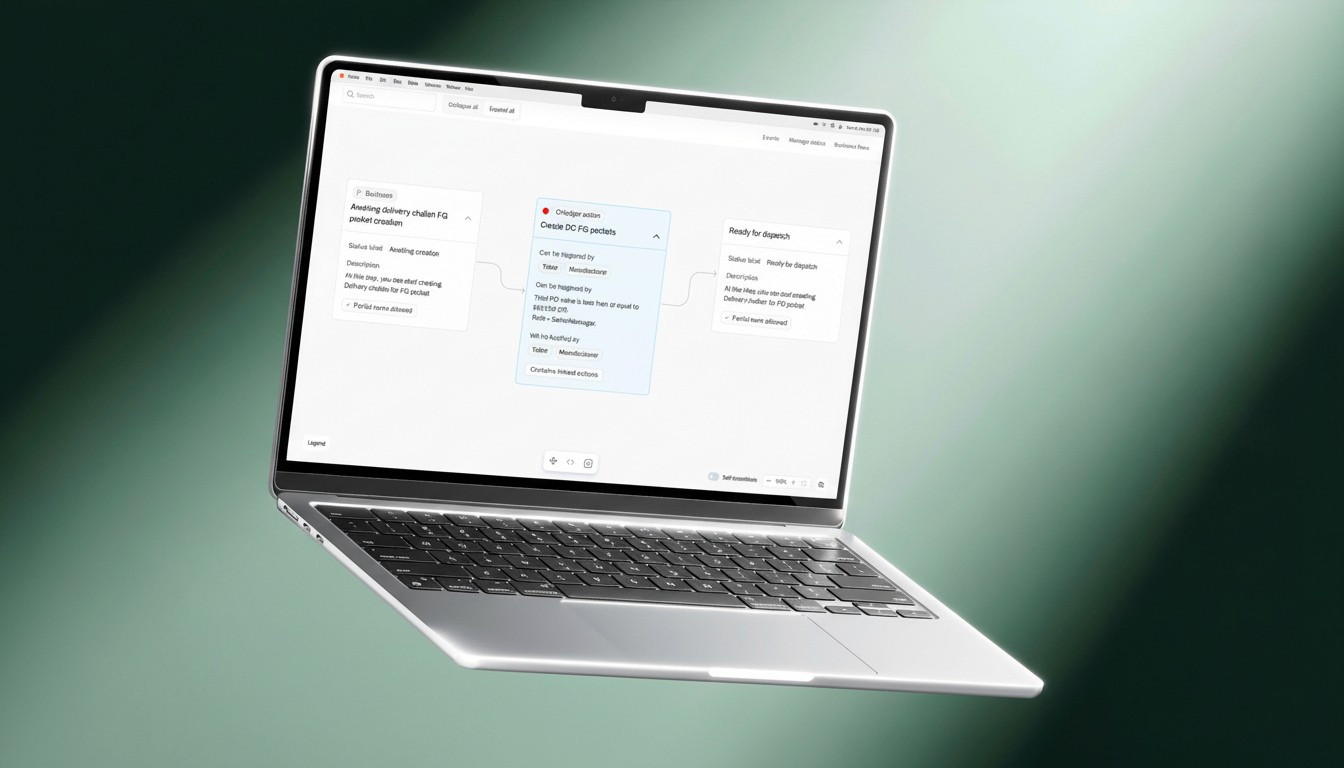
Enabled independent workflow creation by business users by replacing node-based state-machine navigation with a narrative workflow model.
Role
UI/UX designer
Timeline
1 month
Ownership
Feature Design
Context
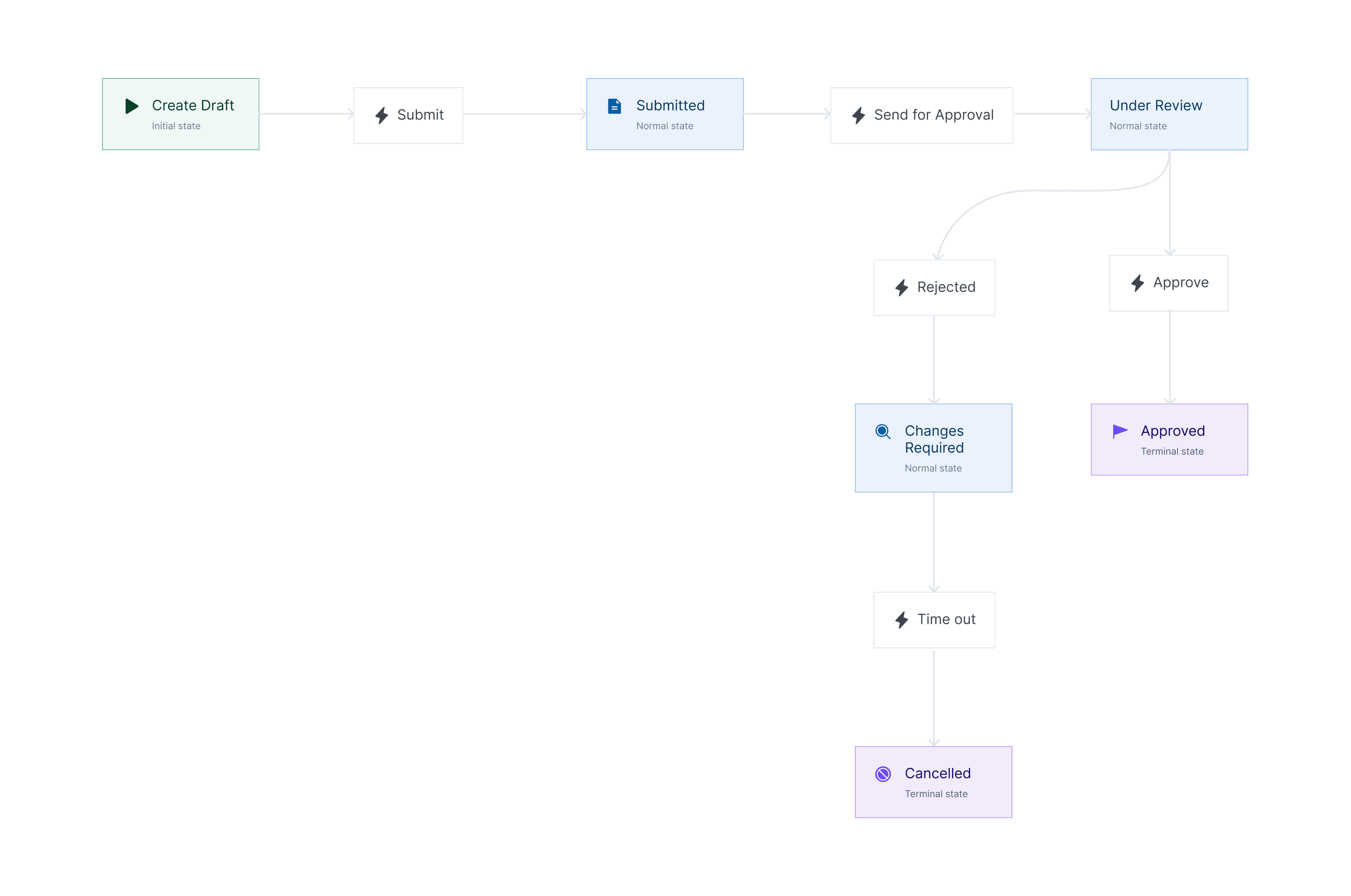
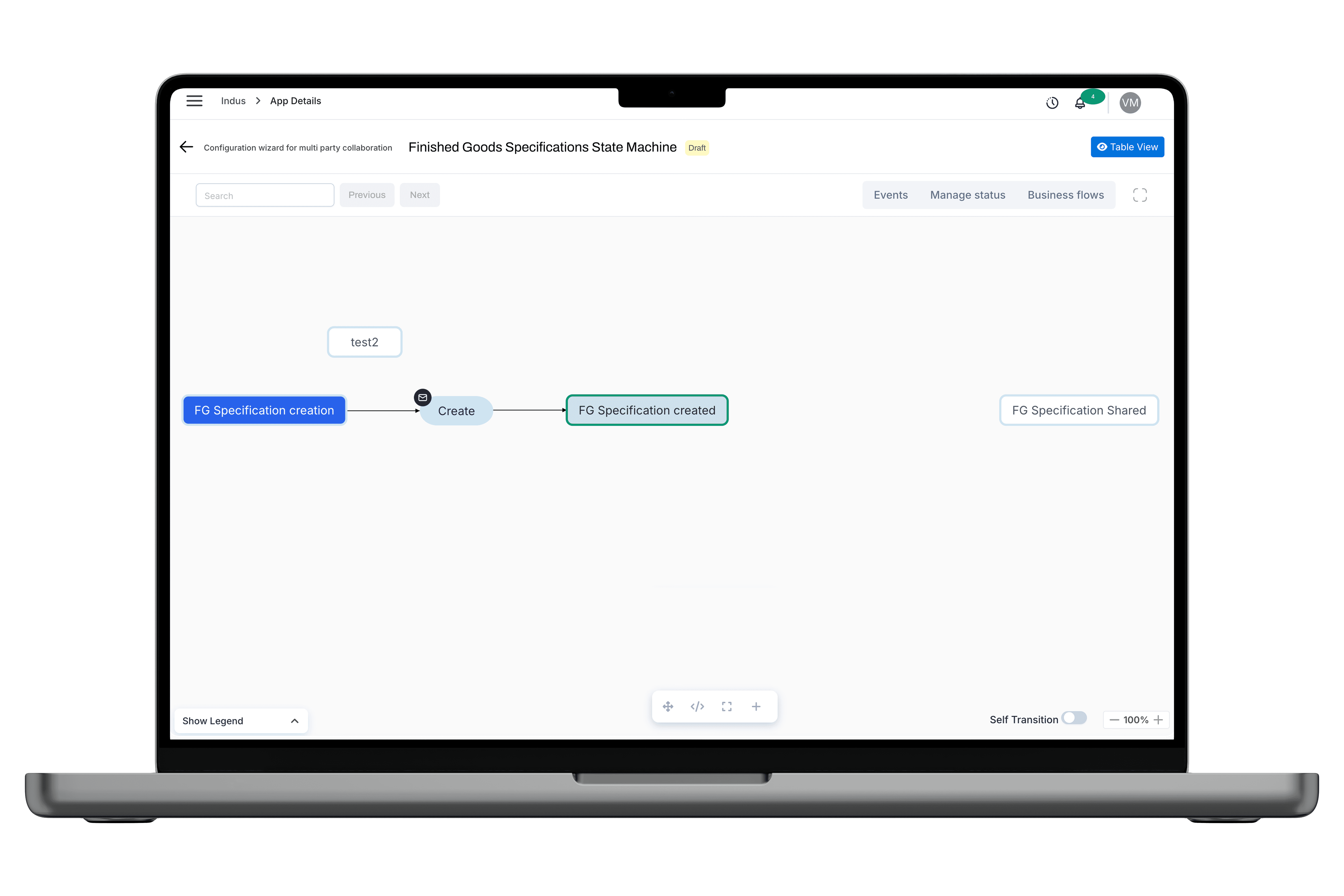
The workflow builder allowed business users to configure process logic using state-machine transitions across multiple system events and conditions. However, users struggled to interpret transition order, guards, and execution dependencies within the node-based topology interface.

Problem
Sales couldn’t demo workflows reliably
70% of workflow setup required engineering support
Users abandoned transitions midway
Users skipped required fields
Advanced features were rarely used
Goal
Transform the workflow builder from a node-based interface into a business-readable workflow design model that allowed non-technical users to understand transitions, conditions, and execution logic without relying on engineering support.
The goal was to improve workflow understanding, reduce configuration errors, and enable independent process modeling across high-density workflow scenarios.
My role and ownership
Role: UX Designer
Key actions
Conducted workflow configuration session reviews to identify where users abandoned transitions and skipped required states
Identified that users struggled with interpreting state-machine concepts rather than interface controls
Introduced expand/collapse interaction patterns to give users control over cognitive load while preserving system transparency
Structured multi-transition creation flows to reduce incomplete workflow states
Partnered with engineering to ensure narrative workflow representation aligned with underlying state-machine constraints
Validated that the redesigned workflow model enabled independent configuration by business users
Tested simplified node-canvas layouts and confirmed they did not improve business-logic readability
Reframed workflow creation from spatial navigation to narrative workflow progression
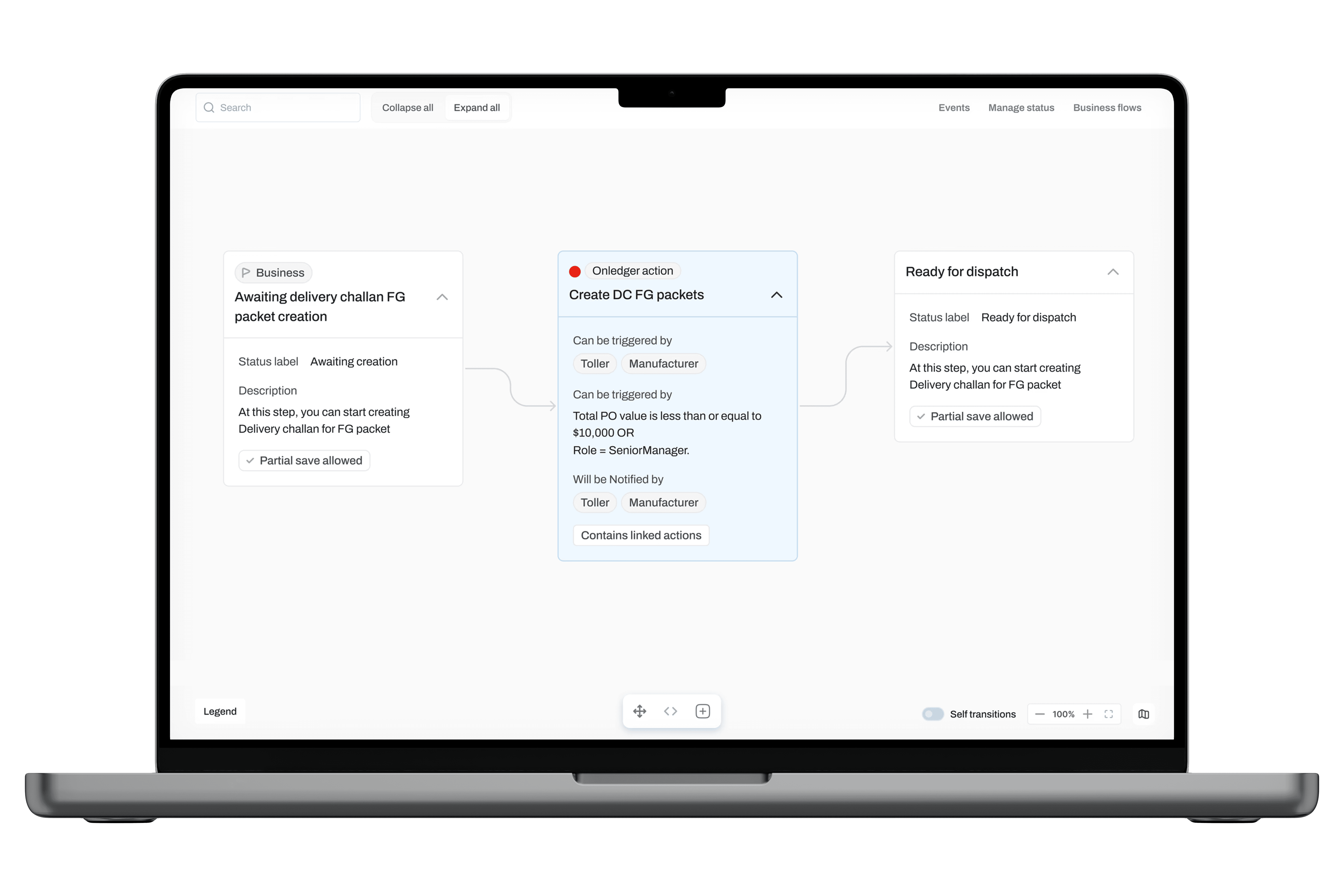
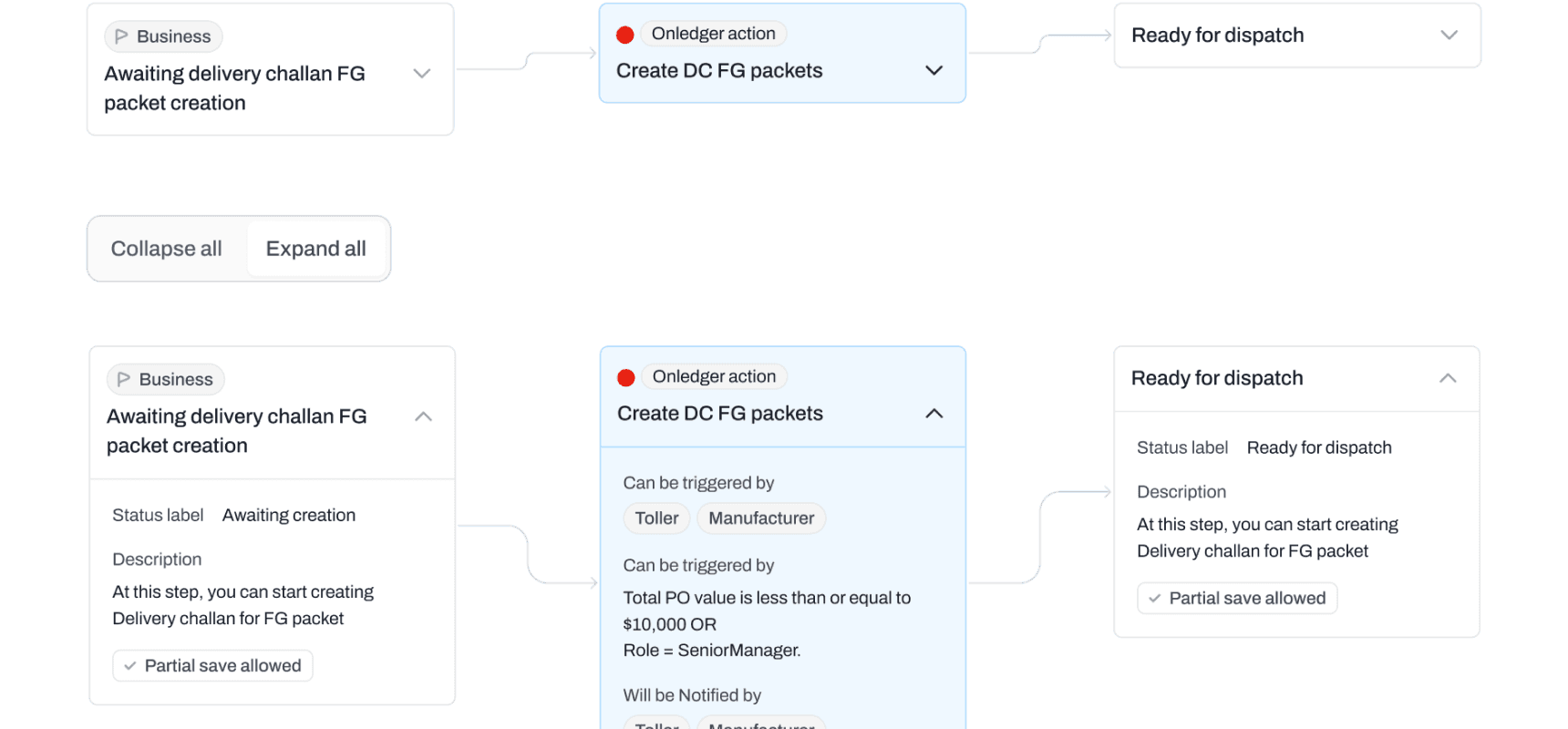
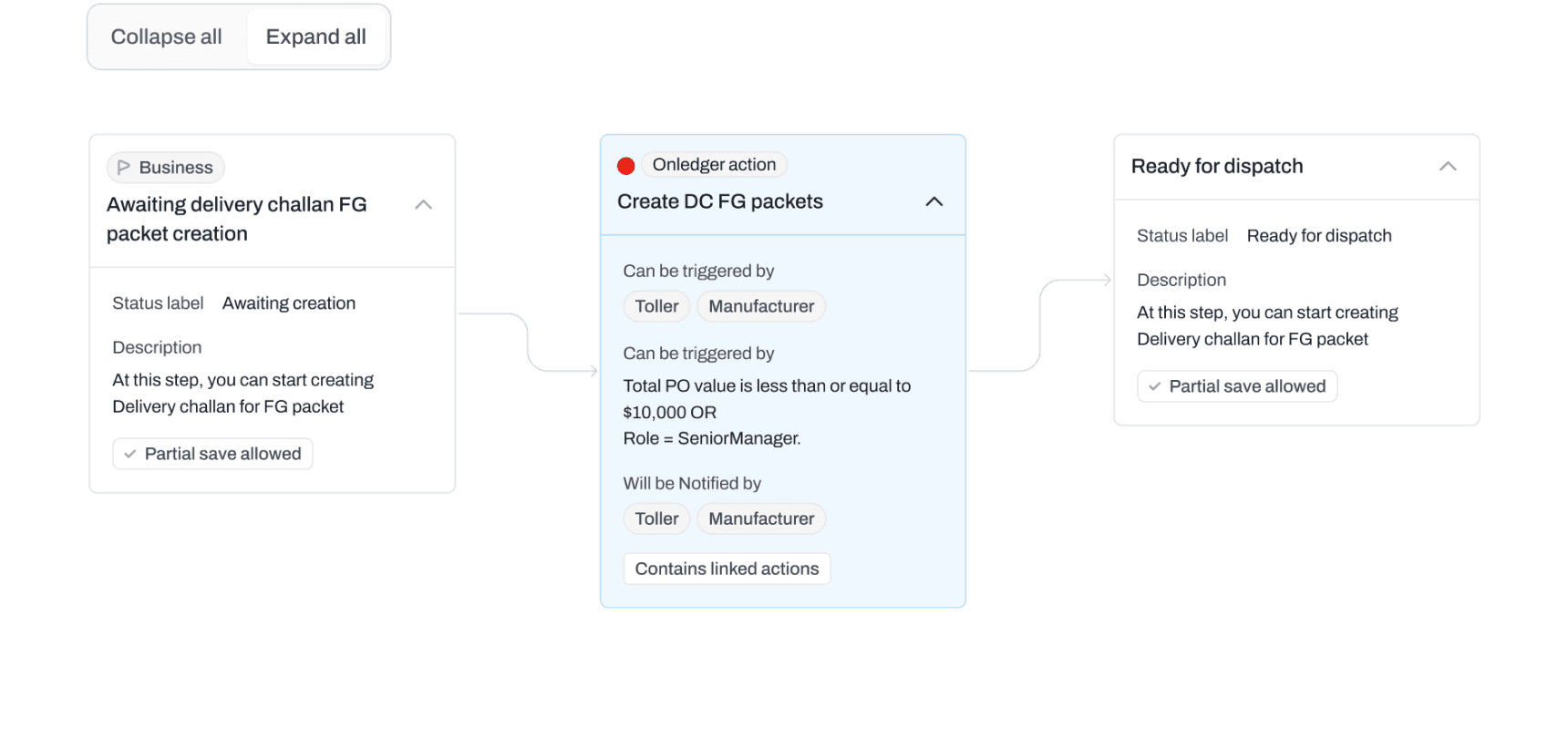
Designed a storyboard-style workflow representation that exposed transition logic in sequence
Design Tradeoff
Breaking Miller’s Rule to Improve Workflow Readability
Instead of reducing interface complexity to follow Miller’s Rule, I exposed more transition-level workflow narrative because testing showed users struggled with hidden structure more than visible density. I introduced expand/collapse interaction patterns so users could progressively reveal workflow details as needed, shifting control of cognitive load from the system to the user. While the PM was concerned about overwhelming users and engineering raised concerns about narrative complexity, progressive disclosure preserved readability while making the workflow narrative understandable without engineering assistance.
Solution architecture
Narrative workflow model
Replaced node relationships with structured workflow storytelling
Users could:
See sequence
See transitions
See required conditions

Expand/collapse logic visibility
Users controlled cognitive load instead of system hiding information
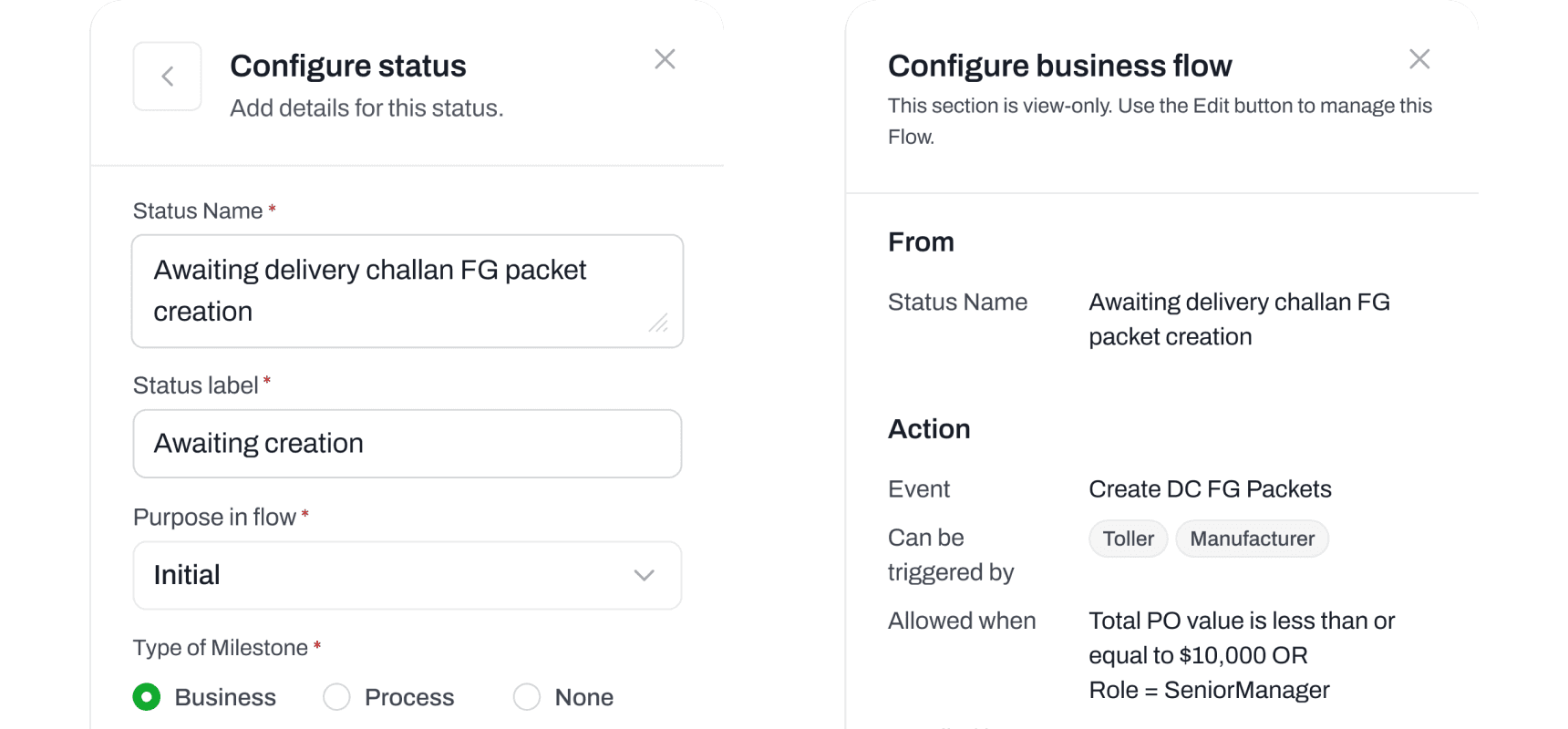
Mandatory-field transition guidance
Prevented incomplete workflow states
Impact
90%
Adoption
43%
Faster multi-transition creation
66%
Workflow error reduction
0
Engineering dependency
Reflection
Workflow builders often expose system topology instead of execution logic. By restructuring workflows around narrative progression rather than node relationships, configuration shifted from engineering-supported setup to business-user-driven modeling.


Copyright © 2026
Take me to the top